
Winter Driving Information
Drivers are urged to use extra caution during the winter season.
Consult these regional sources of information before setting out onto the road.
Our Roads
Provincial Highways
Provincial roads are the major highways owned and maintained by the Province of Ontario through the Ministry of Transportation (MTO). These are usually numbered highways — in Huron County, they include Highway 4, Highway 8, and Highway 21. The province is responsible for plowing, paving, and signage on these roads.
Municipal Roads
Municipal roads are the smaller local roads owned and maintained by a municipality — such as a county, town, or city. For example, ‘County Road 23’ or ‘Main Street’ in your community would be municipal roads. The local Public Works Department manages maintenance, snow removal, and closures on these roads.
Road Closures/Openings
In the event of a winter storm or other incident, the Ontario Provincial Police (OPP) are solely responsible for determining when to close or re-open any provincial or municipal road under the Highway Traffic Act.
Information about road closures and re-openings is shared with the public through www.511on.ca, for provincial roads and www.municipal511.ca, for municipal roads.
Highway and County Road Information
Know Before You Go
Significant Weather Events
When the County is experiencing weather that may affect our ability to maintain the County Roads at the service levels that road users would normally expect, we will declare a Significant Weather Event.
Learn more about Significant Weather Events.
School bus cancellations and delays
In our region, this information is provided by Huron Perth Student Transportation Services.
Web: ourschoolbuses.ca
Local radio stations
Our local radio media provide regular reports to the public using all of the above mentioned information sources.
AM 920 – CKNX
FM 101.7 – The One
Cool 94.5
Country 104.9: Goderich
Shoreline Classics FM
90.5 MyFM: Exeter
Snow plow safety
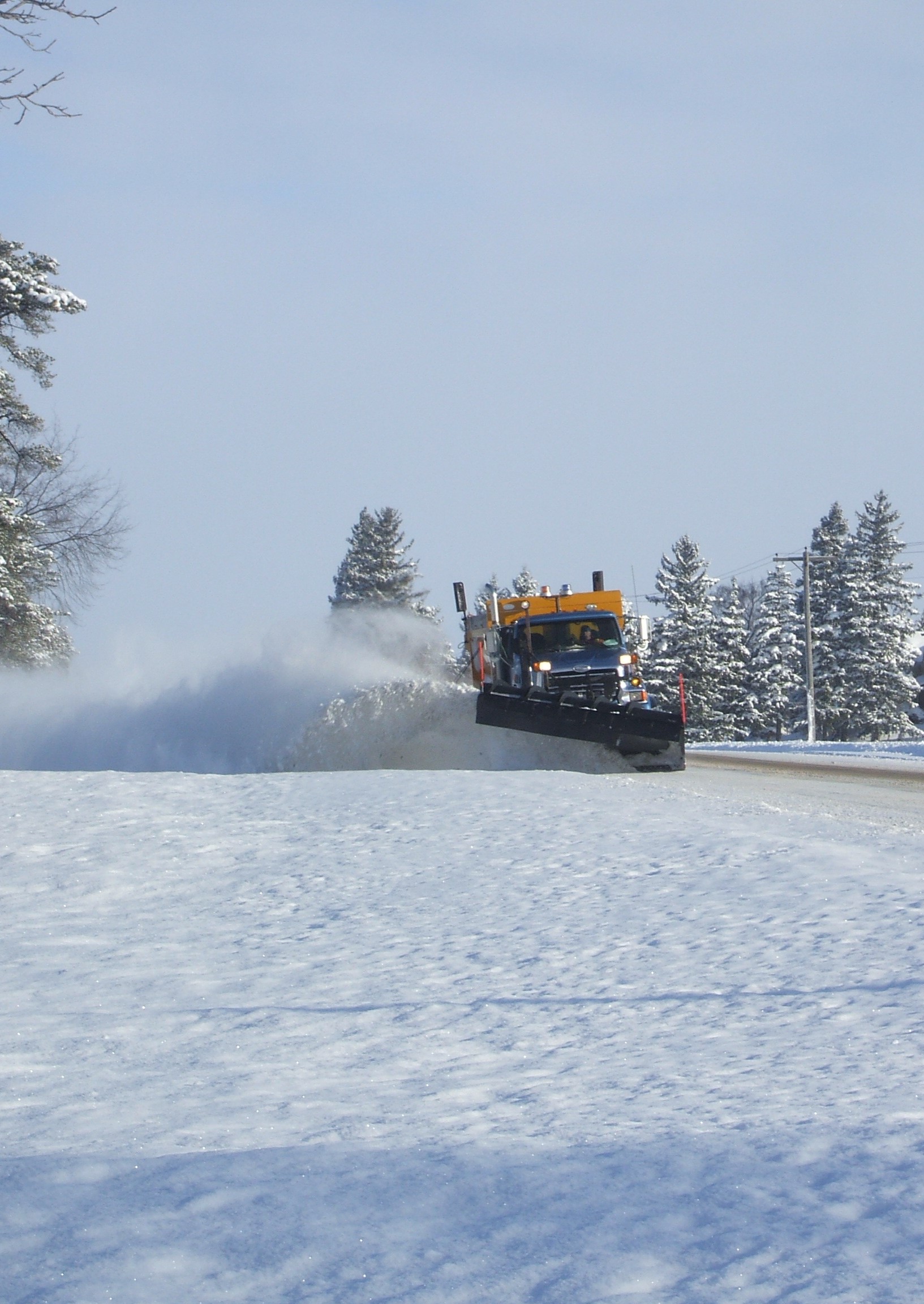
Stay safe this winter and follow these safety tips when approaching winter maintenance vehicles, such as snow plows and salt trucks.
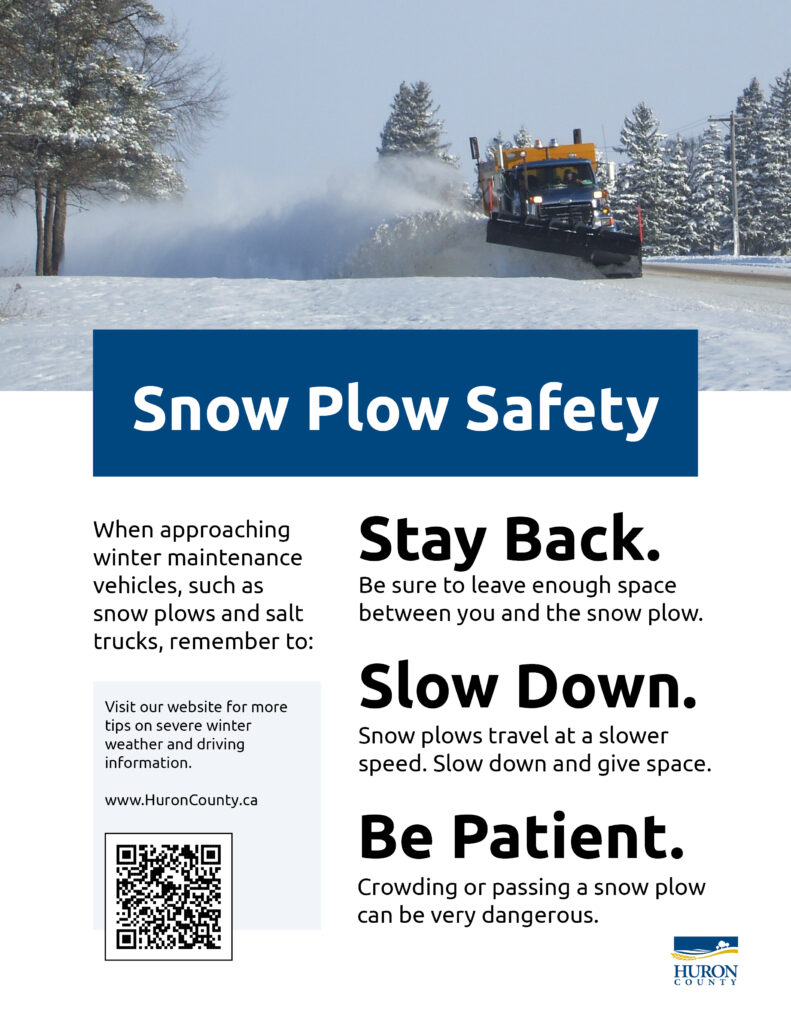
Winter Driving Safety Tips
- Do not drive on closed roads. Respect travel advisories and do not travel on closed roads for your safety and the safety of others. Vehicles parked or abandoned on roadways can be towed and fined.
- Stay back from winter maintenance vehicles. Always maintain a safe distance between your vehicle and the snowplow. Snowplow equipment travels at 25km/hr to 60km/hr working to keep roads safe.
- Slow down on the roads. Snowplows travel at reduced speeds to clear roads effectively. Adjust your speed to keep a safe following distance. When there’s ice and snow, take it slow!
- Be careful around snowbanks. Reduced sightlines due to large piles of snow heaped on corners are common after back-to-back snowstorms. Drivers are urged to be extremely cautious when pulling out of driveways, approaching intersections or moving around snowbanks because they may not be able to see pedestrians on sidewalks or other vehicles travelling on the road.
- Have a snow ready vehicle. Prepare for quickly changing conditions by having working winter tires, windshield wipers, and washer fluid. Stock your vehicle Emergency kit with a shovel, blanket, booster cables, flashlight, and more. Make sure you clean snow off your vehicle and have operating tail lights.
- Practice patience. Avoid passing or crowding snowplows as it can be extremely dangerous. Check road conditions and give yourself extra travel time.
Resources
Severe Winter Weather Guide
When stormy winter weather approaches, stay prepared! Download the Severe Winter Weather Guide to learn more about how to be prepared for winter conditions:
- Safety Tips
- Weather Information
- Winter Driving Resources